Council chiefs expect 'no delays' to Richard Herrod Centre demolition despite planning setback
Plus - State of high streets | Weather update

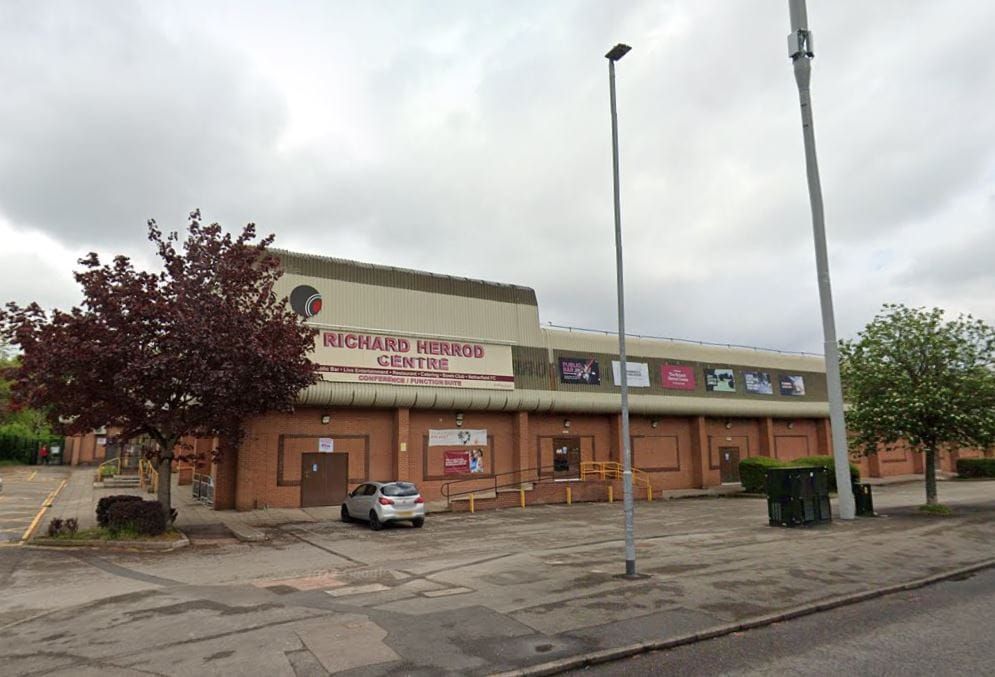
The demolition of a landmark leisure centre should not be delayed despite a planning setback, council officials have said.
Gedling Borough Council has been pushing forward with its £30 million ‘Carlton Active’ project – a scheme which will see a new, modern leisure centre built in Carlton.
The project involves the Richard Herrod Centre and Carlton Forum Centre being knocked down to create the new space on the site of where the Richard Herrod currently sits.
The Richard Herrod Centre’s legacy dates back several decades, from the dry ski slope on site from the 1960s until the 1990s, to being the home of the Gedling Indoor Bowls Club from 1987 until 2026.
It was also used as a vaccination centre during the Covid-19 pandemic.
In late July, the borough council submitted formal plans to itself which outlined its intention to knock the site down, with demolition documents indicating the start goal of September 28, and the completion date expected in either November or December this year.
But Gedling planners concluded last week that prior approval of the demolition is required, meaning the council needs to provide extra information on the means of demolition before it can start tearing the structure down.
Documents say “insufficient information” over the means of demolition was put forward, and extra information on the dust management, air pollution, harm prevention of protected species, and an assessment of the risks to surrounding resident properties, is needed.
This means no demolition works can take place at the Richard Herrod site until these are submitted.
Despite the previously-indicated September start date for demolition works, the council’s most recent planning documents say demolition works are planned to start “before the end of August”.
Gedling Borough Council said on Monday (August 17) that this minor planning setback “should not result in any delays to the project”.
A spokesperson said: “Officers continue to work towards demolition commencing as soon as the remaining requirements have been satisfied.
“The next step is for the council, delivery partner and contractor to submit the additional information requested. This includes ecological mitigation information, demolition method statements and environmental management measures.”
They say enabling works and the internal stripping of the centre “continues”, with “significant progress” already made for demolition preparation and that an updated demolition programme is due.
Recently unveiled plans say ‘Carlton Active’ would have a smaller footprint than the current centre and would be built further south on the site.
Drawings revealed the ground floor will include an eight-lane swimming pool, a teaching pool, changing rooms, a café, a soft play area, a community room and a studio with power-assisted equipment and toilets.
Its first floor would house the gym, two studios, changing and toilet facilities and the pool’s spectator area.
However, the ‘Carlton Active’ project has been met with much criticism, after the borough council decided to not include an indoor bowls facility within the new centre.
Such a facility was originally considered in plans, with its removal effectively displacing Gedling Indoor Bowls Club.
Councillor Henry Wheeler (Lab), portfolio holder for lifestyles, health and wellbeing at the council, previously said a six-rink bowls facility in the plans would add between £5.6 million to £7.7 million to capital costs, leaving a yearly subsidy of around £500,000.
Ian Summerscales, a director at the club, previously said the lowest priced relocation option would have cost around £2 million to £3 million to take over an industrial unit, refurbish it and cover bills.
By Lauren Monaghan (Local Democracy Reporter)
How many empty units across our high streets in Notts?
With the British high street scene being squeezed over recent years, some Nottinghamshire towns have a high number of vacant units – but is the picture improving?
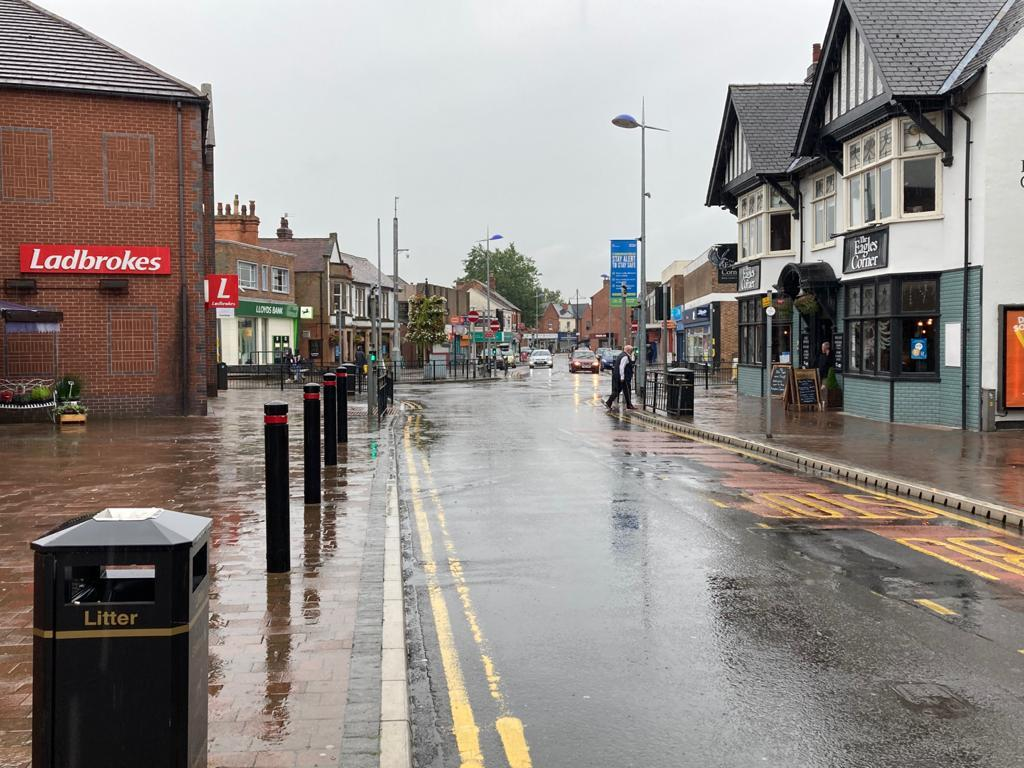
More and more people are shopping online, businesses are struggling with market conditions, and retail units are being left to gather dust.
The retail options on high streets nationwide are also shifting, where Britain has lost almost 1,800 pubs and bars since 2016, whilst the number of tobacco and vape shops jumped from 245 to nearly 2,200 in the same timeframe, according to the government.
Statistics from the Local Data Company in 2023 found one in seven shops sit empty nationwide, with North East high streets particularly constricted, sitting at one in five.
Since January 2015, 6,871 bank and building society branches have closed, according to Which?, leaving noticeable empty shells within our town centres.
The government has been introducing some measures in recent years, allowing local authorities to try claw back the once bustling shopping strips in their areas.
Since 2024, it has been pushing forward with High Street Rental Auctions (HSRAs), new permissive powers for councils that requires landlords to rent out continually vacant units to local businesses or community groups. Some Nottinghamshire authorities are implementing it.
This August, the government announced it would also be giving councils more control over the number of vape and betting shops on high streets, along with pubs, social clubs and venues getting a 20 per cent cut to their business rates, starting next year.
The Local Democracy Reporting Service asked each Nottinghamshire borough and district council to provide its retail unit vacancy rates in its largest two towns – and towns in the north of the county appear to be the most empty.
Town and areas with the most retail units empty
- Worksop, Bassetlaw’s largest town, currently has a high number of retail units lying empty, with a vacancy rate of 17.12 per cent at March 2026 – this has improved since 19.86 per cent in March 2025.
- Mansfield town is close behind, with 17 per cent of shops vacant.
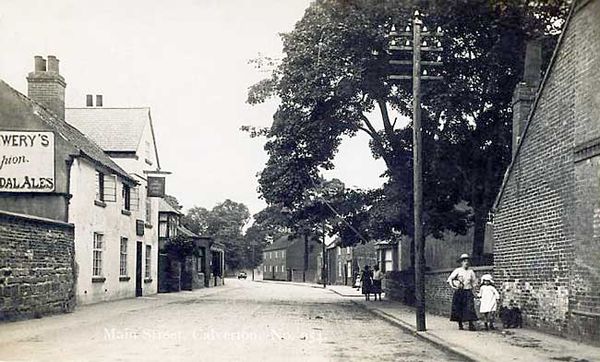
- While Calverton, in Gedling, is classified as a village, its growing size in recent years has earned the local jibe of ‘Calver-town’, with 16 per cent of retail units sitting empty, according to the council.
- Stapleford has 14 per cent of its retail units’ overall floor space unoccupied, according to Broxtowe Borough Council, who choose to calculate vacancy rates this way.
- In Sutton town centre, in the Ashfield district, there is a vacancy rate of 13.2 per cent.
- Newark town’s empty shop unit rate sits at 12.02 per cent.
- Mansfield Woodhouse currently has 12 per cent of retail units sitting empty.
- Arnold, which has the largest town centre in Gedling Borough, has a retail vacancy rate of 10.6 per cent.
Towns and areas where the retail scene is performing better
- Beeston’s vacancy rate, calculated based on the percentage of overall retail floor space that is empty, is four per cent, meaning it has a 96 per cent occupancy rate and is the highest in the borough.
- Bingham, in Rushcliffe, has a five per cent vacancy rate.
- Retford, in Bassetlaw, has a vacancy rate in its retail spaces of 5.44 per cent as of March 2026, down from 8.16 per cent in March 2025.
- West Bridgford, Rushcliffe’s largest town, has a six per cent vacancy rate.
- Mapperley Plains, while a suburb on the Gedling and Nottingham border, has a vacancy rate of 8.6 per cent, according to Gedling Borough Council.
- Ollerton, the second largest settlement in the Newark and Sherwood District has a vacancy rate of 9.57 per cent.
What are the councils doing to boost the retail scene and footfall in their towns?
Ashfield
Ashfield District Council adopted HSRAs as a new power last September, which it says has meant some landlords are “actively searching” for new tenants, with some selling their empty units.
The authority has brought in a shop front grant for Sutton town centre and Stanton Hill to improve internal and external aesthetics.
Bassetlaw
In Bassetlaw, the success in bringing down its vacancy rates has been partly due to it being an early adopter of the HSRA initative, its ‘Discover’ campaigns for Worksop and Retford to increase footfall, free business support and small growth grants.
There has also been more money towards shop fit-out grants of up to £15,000 to attract new businesses as part of the government’s Pride in Place funding, which enabled seven empty units to be brought back into use in Retford, Worksop and Harworth and Bircotes.
Broxtowe
Beeston has had recent investment in its night-time economy, particularly for the council-owned Square.
Stapleford has benefitted from investment from the £21 million Towns Fund, which is still yet to finish. The new Pencil Works project is expected to further increase footfall.
The council was also an early adopter of the HSRA programme, where three empty units in Stapleford have been brough back into use and the vacant Old Rock property was the first premises in England to be taken to auction.
Gedling
Gedling Borough Council has developed the Ambition Arnold Visionary Masterplan to increase footfall in the town.
An outline business case and design work for a new leisure centre, theatre and library has also been put forward, which will be delivered subject to whether grant funding is available.
Mansfield
Mansfield is undergoing various regeneration projects, with improvements to its market place, its streets, the Mansfield Connect project on the site of the former Beales building and food hall plans for the former BHS site.
There are also new homes being created on White Hart Street – a site which accounts for a lot of empty business space – which Councillor Charles Hammersley, portfolio holder for planning and growth at Mansfield District Council, said will bring “new energy into Mansfield”.
He said: “We recognise that the sight of empty shops can generate some negativity, and we are actively engaging with property owners to find out how we can work together to make better use of these spaces. We will be sharing some more details about this project soon.”Newark and SherwoodCllr Claire Penny, portfolio holder for sustainable economic development at Newark and Sherwood District Council, said the authority is “bringing back to life” the empty M&S store, “transforming the visitor offer” at Newark Castle, has “saved” the Buttermarket and has “revamped” Newark’s parks and playgrounds.She says the authority has transformed 14 Market Place, has delivered free-to-attend events and, in partnership with Newark College, has a new construction college and the Air and Space Institute.In Ollerton, the council is improving links between Forest Road and Rufford Avenue and bringing a “cinema offer” into the town.
By Lauren Monaghan (Local Democracy Reporter)
🌤️ Weather update
Your borough weather forecast for the next few days...
TODAY: 🌤️ A mostly dry start with bright spells though some showers developing around midday. These could turn heavy at times, with the risk of thunder. Showers moving away eastwards by the late afternoon, allowing skies to brighten again. Temperatures around average. It will turn drier for a time overnight with clear spells, before further lighter showers move in from the early hours.
TOMORROW: 🌦️ Some sunshine and just the odd shower initially. However, heavy thundery showers move southwards through the morning and into the afternoon. Turning a little lighter later on. Cooler than Wednesday.
FRIDAY: 🌦️ Temperatures staying below average. Isolated showers continuing but becoming more settled again
💊 Late Night Pharmacies
ASDA Pharmacy Arnold
111-127 Front Street, Arnold, NG5 7ED
Open until 9pm Monday to Saturday
Medina Chemist (closest late-opening option)
89 Victoria Road, Netherfield, NG4 2NN
Open until 9pm Monday to Saturday